
Before I begin, a special thank you to CapFriendly, which is essentially made up of volunteers. Their site makes mine and all other writers lives much easier, and they are my main source of information in most of my posts. So, even though I don’t acknowledge them in most of my posts, know that’s where a lot of my info comes from, and all their hard work is greatly appreciated. I just felt like I should say something eventually as I probably wouldn’t be able to do posts like this (or any really) without their site.
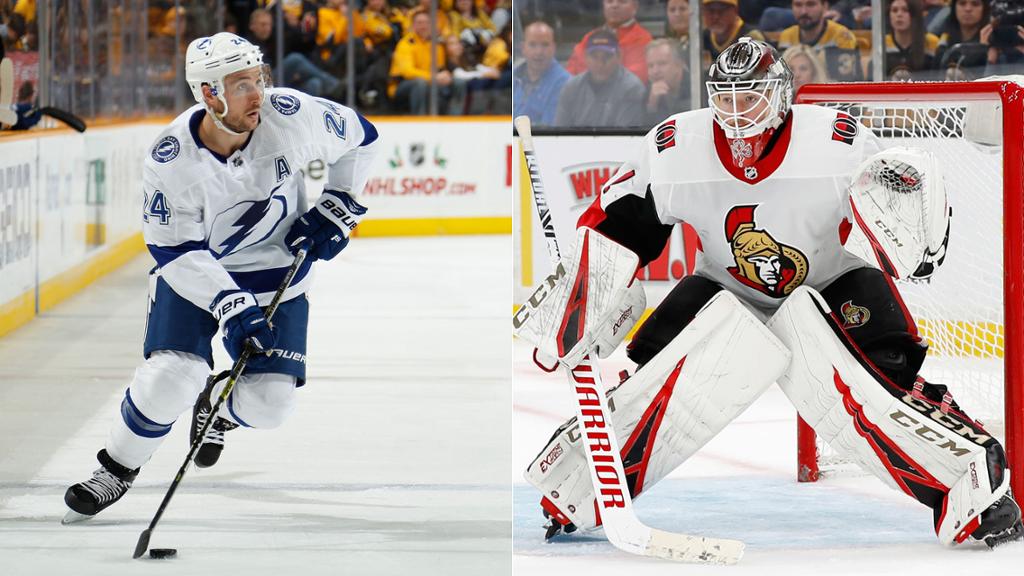
The Tampa Bay Lightning announced today that they have traded forward Ryan Callahan and their 2020 fifth round pick to the Ottawa Senators in exchange for goaltender Mike Condon and Ottawa’s 2020 sixth round pick. But, this deal is not quite as simple as it may seem on the surface. Callahan will be placed on the LTIR, as he was forced into retirement by a back injury, and Condon was buried in the minors last season, which is where he’ll almost certainly stay this season. Callahan also has one year left on his deal that carries a cap hit of $5.8 million, while Condon has one year left on a deal that seems him count $2.4 million against the cap if he plays in the NHL, but if buried, that number drops to $1.325 million. However, it gets a little more complicated from there.
While Callahan carries a $5.8 million cap hit, his salary is only $4.7 million. On top of that, because he will be placed on the LTIR, injury insurance will pay 80% ($3.76 million) of that salary, meaning Senators owner Eugene Melnyk will only be responsible for paying $950,000 of Callahan’s salary. That’s a total savings of $2.06 million through this trade for him and is a big reason as to why it happened given how notoriously cheap he is. On the other hand, Tampa Bay loses $1.325 million of cap space from Condon because if it hadn’t been for this trade, they would have just placed Callahan on the LTIR, thus allowing themselves to go $5.8 million over the cap. But the money isn’t a big deal for Tampa, and only changes things for this year as both contracts are up at the end of this season, which is when they need to clear cap space. But, more on that later. The Lightning have $11,126,669 in projected cap space for next season assuming they bury Condon and fellow goaltender Louis Domingue in the minors, which is likely since they already have two rostered goalies, and that will be enough to sign their remaining RFAs in forwards Brayden Point and Adam Erne. Overall, this is a good trade for both sides, as it allows Tampa Bay to avoid using the very complicated LTIR and still gives them space to sign their two remaining RFAs, and it helps Ottawa stay at the cap floor while also saving them real money, which is precisely what Melnyk wants to do. Contrary to what many people think, Ottawa did not get fleeced in this deal, and in my opinion, this is actually a really good deal for them.
As I alluded to earlier, next season things get very murky for Tampa Bay, as they will have to shed significant salary in order to be cap compliant after signing goaltender Andrei Vasilevskiy to an eight-year, $9.5 million AAV contracted yesterday and Point looking to get at least that. I can guarantee this because, although I don’t have any inside information, it’s a safe bet that the cap won’t go up by $9.5 million next season alone. Also, they have other RFAs they will need to sign, and while none will command huge money, things add up quickly when you are in cap hell. To put into perspective just how bad Tampa’s situation looks for next year, their projected cap hit next season is $67.4 million with just 13 players under contract for then. That isn’t pretty and means that several players (and/or possibly a star) will be on the move in order to make space. So, this trade helps them for this year as they get to avoid using the incredibly complicated LTIR, but it doesn’t do anything to help their situation next year, which is when things get ugly. But, this move also makes it clear that the Lightning are not concerned about anything beyond this upcoming season right now, and are giving themselves one more chance to win as currently constructed. That historically hasn’t gone well for other teams, but I guess you never know. I may do another, more in-depth post at another time as things become clearer, but I just wanted to mention it now for the people trying to figure out exactly how this helps Tampa. The short answer is it doesn’t help them in any tangible way (and actually costs them another $1.325 million of their cap), but it does let them avoid the mess that is the LTIR system, so it was a worthwhile move. There is a lot more to be done though if they want to stay in contention for a long time.
 Hockey Addict